Fur-tastic Results
Tracking Furbearer Populations Through Logbooks
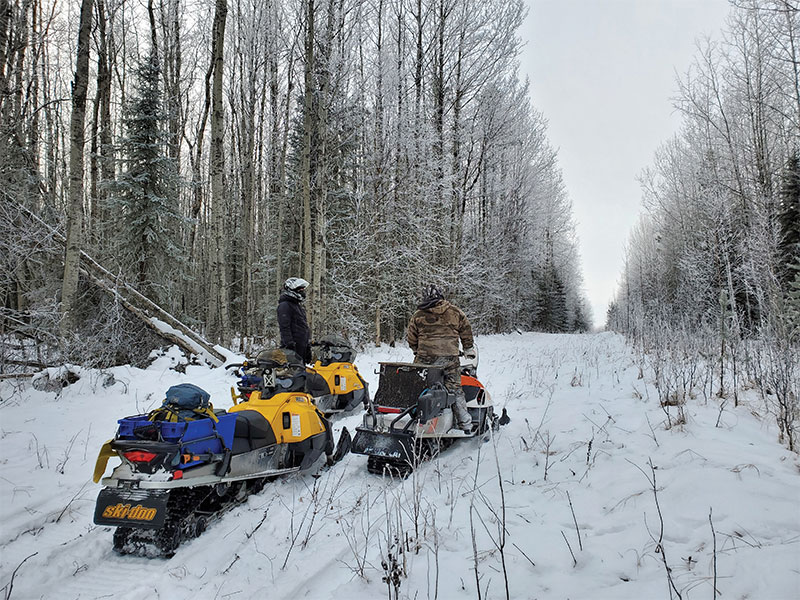
Alberta’s trappers are doing more than following traditions—they’re helping monitor the health of our furbearer species, one logbook at a time.
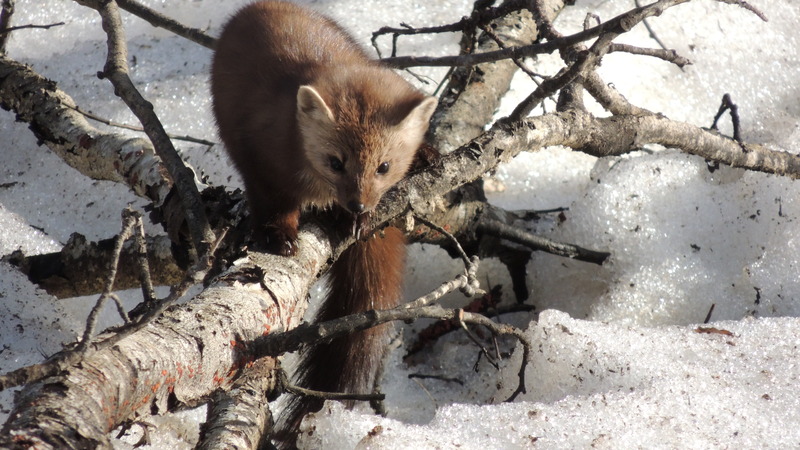
Alberta Conservation Association (ACA) has been working with the Alberta Trappers’ Association (ATA) to collect data on American marten (Martes americana) using trapper logbooks to better understand population trends in Alberta.
Since 2018, trappers have submitted over 1,000 logbooks from 389 Registered Fur Management Areas with marten data collection and species with a harvest quota (fisher, lynx, wolverine, and otter). Wolf harvest data was recently incorporated into the logbooks as part of the provincial wolf management program.
Why These Logbooks Matter
Using a standardized logbook approach allows the opportunity to track furbearer population trends over time at the provincial and natural region levels. Submitted annually, these personal logbooks have provided detailed information about harvests, trapping effort, and wildlife encounters and providing critical data for wildlife conservation across the province. Without this vital information, details about American marten and other furbearer species would be difficult to track.
Predicting Populations with New Tools
By using information from trapper logbooks about how many martens were caught and how much effort was put into trapping them, ACA tested a new method to estimate marten populations. Statistical population reconstruction combines harvest data with survival estimates to give a clearer picture of how many martens live in different Fur Management Zones. The number of martens in each zone changed from year to year. Biologists can use this tool to see how hunting and natural survival affect marten numbers. As we collect more years of data, our predictions will become even more accurate.
Additional Discoveries
As part of a marten aging trial, ACA compared accuracy in aging marten skulls provided by ACA and ATA participants by looking at how the chewing muscles had affected the bones on the sides of the skull. To know exactly how old a marten was, we pulled the premolars and had them aged in a lab using the cementum annuli aging process. This involves counting rings on the premolars, a similar idea to counting rings on trees. This provided age estimates in the population.
Looking Ahead
ACA hopes to expand logbook program participation for future valuable insight into patterns of furbearer harvest and population data. If you're a trapper, your logbook is more than a record, it's a vital part of Alberta’s conservation efforts. By participating, you're helping build a clearer picture of wildlife populations and contributing to sustainable wildlife management.
Project Partners
- Alberta Trappers’ Association
- Government of Alberta