When the noise subsides and a theme emerges—so clear you can almost grasp it—you know you’re in a good conversation. Not loud, not big…just clear. That’s exactly where this one landed.
Wild Sheep Foundation Alberta (WSFAB) president Mike Smith, and Alberta Conservation Association (ACA) Board of Directors’ representative Chuck Priestley, didn’t simply rattle off numbers of animals, acres, or memberships. Instead, a quieter line of thought surfaced again and again through their stories, decisions, and hard-earned perspective.
Do fewer things. Do them well. And stay with them.
It’s an approach that might feel increasingly rare in conservation work, where visibility and scale compete with depth and durability. For WSFAB, intentionality is the strategy.
Choosing work that matters
Momentum is easy to chase when there’s so much to do. Projects abound. Partnerships beckon. But Smith and Priestley are clear-eyed about the risks. “You can spread yourself thin very quickly,” Priestley says. “And when that happens, nobody really wins—least of all the wildlife.”
Every project is chosen with care. Early on, pointed questions are asked: Why this project? Why now? And what does success look like—not next year, but ten years from now? Not every worthwhile idea fits the mandate, and not every project needs WSFAB at the helm. Effectiveness, not presence, is the goal.
Selective projects, stronger outcomes
WSFAB may be modest in size, but its impact is anything but. With hundreds of engaged members across the province, and over three decades of conservation work, the organization operates with a clear understanding of both its capacity and its responsibility.
Well-honed perspective defines how conservation happens on the ground. Rather than chasing scale, WSFAB invests deeply in a few select initiatives where effort, funding, and expertise are concentrated—and where results endure.
Health for the long term
Smith points to wild sheep disease management as a key example. WSFAB works closely with provincial biologists and partner organizations to address pneumonia risks and improve long-term herd health. In Alberta, infectious bacterial pneumonia—most often linked to Mycoplasma ovipneumoniae (M. ovi) from domestic sheep and goats—remains one of the greatest threats to bighorn populations.
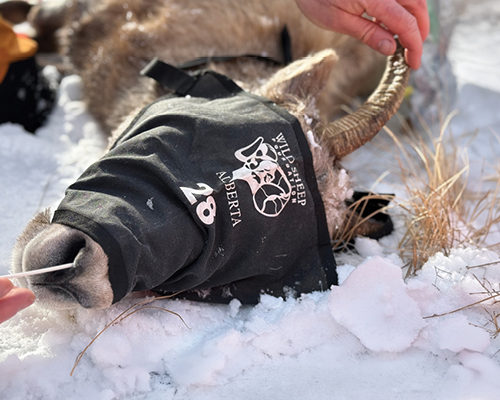
A 2023 outbreak in the Diamond Valley/Sheep River area resulted in the loss of 18 bighorns, underlining the stakes. Preventing future outbreaks isn’t a quick fix. It requires ongoing testing, thoughtful habitat separation, and sustained collaboration with the province. “It’s slow, careful coordination,” Smith says, “but this is the kind of critical work that actually protects herds over the long term.”
Heroes for habitat
Habitat enhancement offers another example of WSFAB’s work. Smith is especially passionate about prescribed burns—which may sound counterintuitive but are vital for maintaining healthy sheep ranges.
“Even if humans see it as a bad thing, fire is part of the natural cycle,” he explains. “When you remove it entirely, you start to lose the open landscapes and quality forage that bighorn sheep depend on.”
Working with government partners, prescribed burns renew vegetation, limit encroaching growth, and restore balance. The work requires precision and patience. Once the smoke clears, it’s largely invisible—but over time, it’s foundational.
Access stewardship is another core project. Protecting and managing access points isn’t flashy, Smith notes, but it’s essential. Without thoughtful planning, even the healthiest habitat can be put at risk. “Access is easy to overlook until it becomes a problem,” he says. “If you don’t get it right, all the habitat work in the world won’t matter.”
For Smith, this approach is about responsibility—to donors, members, and the landscapes themselves. Conservation dollars are hard-earned and finite. Spending them well matters. “The focus isn’t how many projects we start,” he emphasizes. “It’s whether the work we’re doing actually moves the needle.”
Partnerships that take hold
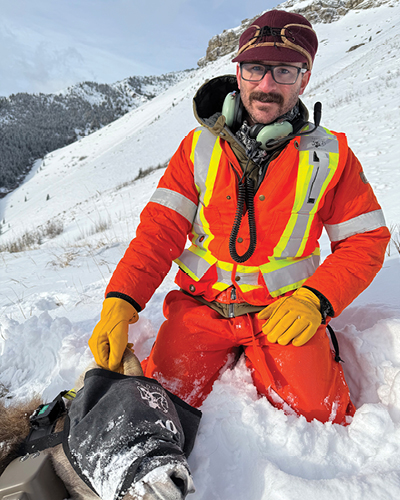
Intentionality also shapes how WSFAB approaches partnerships. Collaboration is crucial, but effectiveness depends on trust—and trust, like anything worthwhile, takes time.
The organization works closely with landowners, provincial biologists, academic researchers, and conservation partners across Alberta. These relationships aren’t transactional. They’re built through consistency, respect, and follow-through. “Showing up matters,” Priestley says. “Doing what you say you’re going to do matters.”
Strong partnerships often accomplish more than formal agreements ever could. “It’s not about how many logos you can put on a poster,” he notes. “It’s about whether the people you’re working with actually want to work with you again.” That reputation has earned WSFAB credibility in complex conservation environments—and kept it there.
What it means for members
For members, this approach offers clarity—and momentum. Priestley recalls recognizing this passion immediately. “They were all in. All in!” he says. “I knew right away this was a really good group to be involved with.” What stood out wasn’t just enthusiasm, but focus—a disciplined approach to choosing projects and using limited resources well.
That focus carries through to the membership itself. When WSFAB puts out a call for help, volunteers step forward quickly—often within hours—ready to get boots on the ground. Priestley adds, “That connection between seeing a conservation need and being out there the next day making it happen—that’s really powerful.”
Trust underpins that responsiveness. WSFAB is volunteer-run, with the vast majority of dollars directed straight into conservation. Members know their time, energy, and funding go directly toward on-the-ground work.
Each year, that commitment comes into focus at WSFAB’s annual banquet. Widely regarded as the largest conservation banquet in Western Canada, it routinely brings close to a thousand people into the room—not out of obligation, but enthusiasm. It’s a fundraiser and a celebration, but more than that, it’s a visible expression of a community deeply invested in the work.
Why it matters
Conservation is never finished. Landscapes change. Pressures evolve. The need for thoughtful stewardship only grows. Operating in reality, WSFAB’s approach acts as a safeguard—keeping effort focused, partnerships strong, and outcomes built to endure beyond any single initiative or season.
For Priestley, the philosophy is simple. “That’s exactly it,” he says. “We choose quality over quantity, every time.” In the end, it’s the work that endures—long after the conversations end.
Learn more at www.wsfab.org