There's nothing like a peaceful day at your favourite fishing pond—rod in hand, the sun on your back, and the anticipation of that first bite. But what if, instead of clear sparkling water, you're greeted by a thick green haze that looks more like pea soup than a pristine fishing hole?
That murky water is more than just unappealing, it's often a sign of deeper trouble beneath the surface.
Ponds that appear very green and soupy are typically overloaded with nutrients, especially phosphorus. In aquatic ecosystems, phosphorus acts as a powerful fertilizer that encourages the rapid growth of algae and aquatic plants. While a healthy amount of plant and algal growth is essential—it provides food and shelter for fish and insects—even a small increase can trigger big changes, and too much can throw the system off balance.
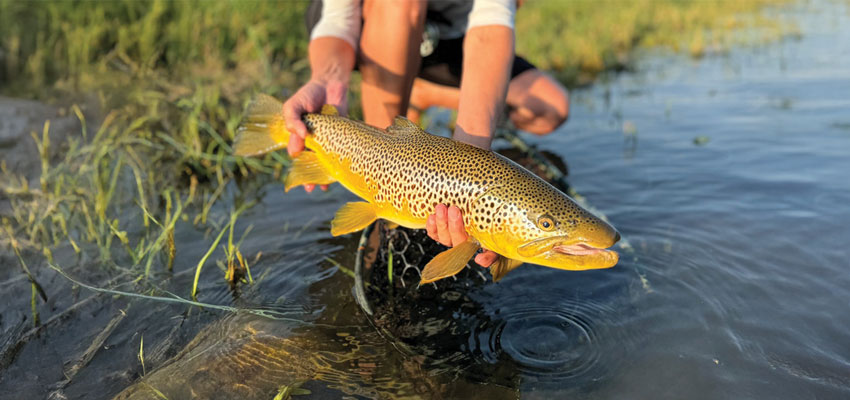
Here's where the real problem begins. When thick blooms of algae eventually die, they don't just vanish. Bacteria and other microorganisms break them down, and that process uses up oxygen. In extreme cases, the oxygen in the water can be so severely depleted that fish are left with very little to breathe—or worse, no oxygen at all, leading to fish death. Low oxygen levels stress fish, disrupt feeding, and can lead to widespread die-offs. When fish are stressed and not feeding, they don't bite; this means that anglers aren't catching fish. Take note anglers: healthy water means healthy fish with healthy appetites!
Our studies of stocked fishing ponds revealed a pattern where a small number consistently show poor water quality and low fish survival by mid-summer. These ponds are usually shallow and nutrient-rich, creating ideal conditions for algae overgrowth. And once excess nutrients enter a pond, they're incredibly difficult to remove. Nutrients are recycled through a loop of plant growth, decay, and re-release from sediments into the water—perpetuating the problem.
Alberta Conservation Association (ACA) is working on solutions to improve water quality in stocked ponds to create healthier ecosystems, and better fishing opportunities. The best place to start is the surrounding landscape. Healthy riparian areas act as natural filters, preventing sediment and excess nutrients from entering the water. However, in some instances, we don't have control of enough of the surrounding landscape to create effective buffers to incoming nutrients. In that case, we look at in-pond solutions.
One method we're investigating is the use of alum (aluminum sulfate), commonly used in water treatment facilities around the world and in lakes and reservoir treatments to control phosphorus and improve water quality. The active ingredient in alum is aluminum, which binds with the phosphorus in the water, making it unavailable for plant and algae growth. Less algae growth means less decay—and more oxygen left in the water for fish.
Through small-scale experiments and careful planning and help from the Northern Lights Fly Fishers, ACA biologists determined the optimal amount of alum to apply to one of ACA's stocked ponds while maintaining healthy pH and alkalinity levels in the water. Once we had the dose right, Westlock County helped us place 45-gallon drums of liquid alum around the pond and used chemical pumps to evenly distribute it across the surface. This not only ensured that phosphorus in the water was removed, but also formed a protective layer of alum on the bottom of the pond to capture nutrients trying to migrate up from pond sediment.
ACA applied a total of 9,430 litres of alum into 38,089,000 litres of pond water and the improvements were immediate—water clarity increased as alum bound with suspended particles (including phosphorus) and sank them to the bottom.
Since treatment, we've monitored the pond's water chemistry and oxygen levels—recording a tenfold decrease in phosphorus, and improvements in oxygen concentrations. The pond now has a much more stable environment for fish, with no large algae blooms or oxygen crashes. Oxygen levels have remained suitable for fish throughout the entire summer.
We've also seen slight improvements in winter oxygen levels. While the pond still isn't suitable for year-round fish survival, and may never be owing to how shallow it is, winter oxygen concentrations now support fish for about a month longer—potentially providing ice fishing opportunities for anglers looking to take advantage of early ice conditions.
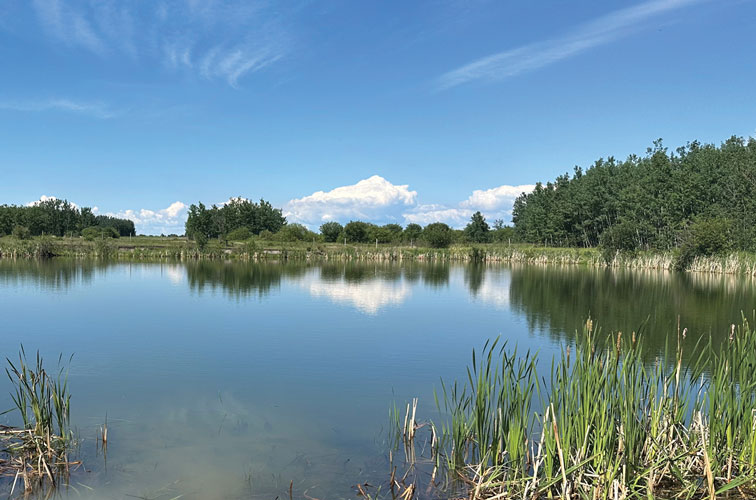
ACA will continue to monitor the pond to assess how long the alum treatment remains effective (10–15 years). This will help determine if the long-term benefits justify the cost of materials and labour. Alum treatment could become another tool in the toolbox to help keep our fishing ponds healthy for years to come.
So next time you visit your favourite fishing hole, take a moment to look closely at the water. The colour and clarity may be telling you more than you think. Healthy water means healthy fish.
Learn more about this project at www.ab-conservation.com/downloads/annual_summaries/fish/aca_summary_2024-2025_fish_pond_rehabilitation.pdf
Photo credit (top): Adrienne Finnegan, Westlock County