"I can't believe my eyes!" is a pretty common blurt of incredulity. But is it the eyes or the brain processing the view?
Like a camera lens, our eyes just report exactly what photons arrive on the back of our eye surface. The interpretation of that electron imprint is layered on expectation, experience, knowledge, and even fear. Visual detection, evaluation, and interpretation are complex processes.
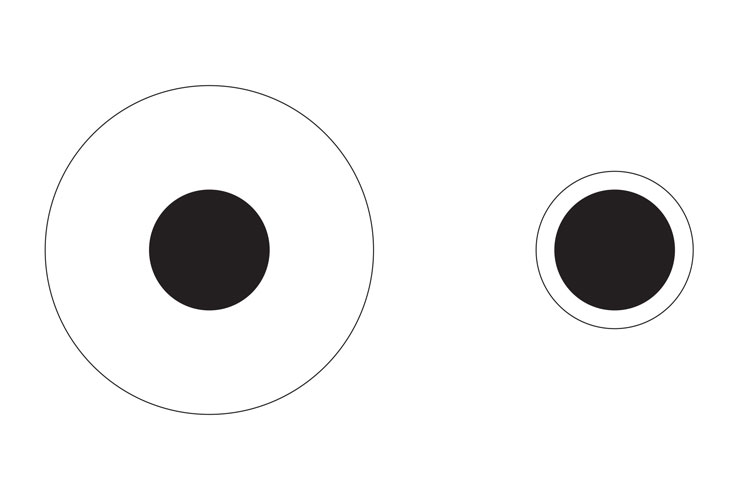
For example, the black dots (1) are the same size, even though the one on the right may appear larger, which leads into the quote, "Believe half of what you see and none of what you hear."
Camouflage Meets the Eye
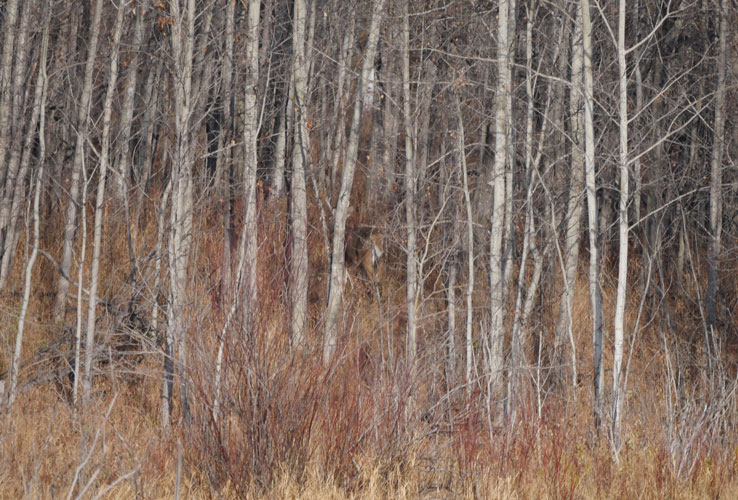
For mastery of Alberta camouflage, I would nominate cougars, snipe, rattlesnakes, ruffed grouse, and white-tailed deer. This photo (2) is one I shot from the highway of a sneaking white-tailed buck.
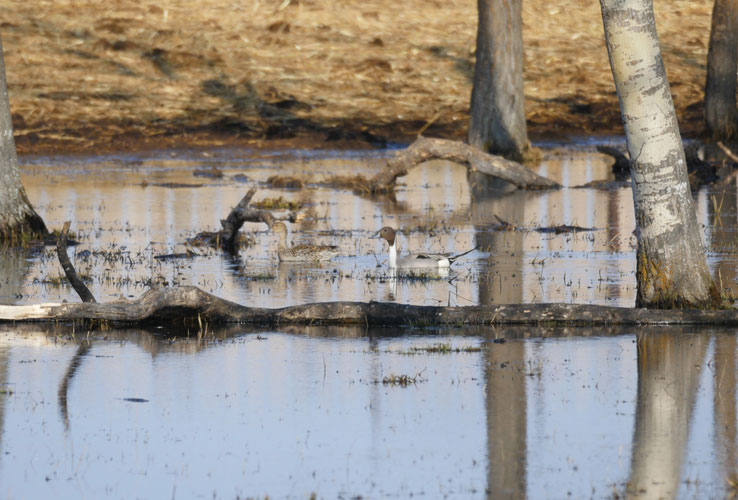
There are several reasons biologists believe male ducks are more strikingly coloured than hens of the same species. Drakes want to strut their stuff to be the most desirable. Hens may benefit, survival-wise, by associating with colourful drakes that draw the attention of incoming predators. This seems only fair because the camouflaged hens have to sit still in tall grass for 28 days while predators are searching for them—and where a 20 percent nest survival is considered pretty good. The pintail hen in this image (3) is out in the wide open, but is barely noticeable because our eyes lock onto the more striking drake.
The Watchers
You may know some birdwatchers, and might enjoy cruising through Elk Island and Jasper National Parks to view large animals, but how many ardent fish watchers are there out there? Biologists Amanda Joynt and Michael Sullivan even included a section in their book, Fish of Alberta, that outlines popular fish-watching sites and how to best view fish. There are fish-viewing stations on the Trans-Canada Highway just west of Jasper, where one can stop and watch migrating salmon.
Even though stillness and silence are beneficial, wildlife viewing is not a passive activity. To really SEE wildlife takes visual effort, attentiveness, pattern recognition, patience, and ideally some good binoculars. Charles Elliott's book The Outdoor Eye: A Sportsman's Guide details how to actively look for wildlife in the very habitats they use to obscure detection—the flick of a ground squirrel's tail, the black eye of a motionless snowshoe hare, the characteristic angle and shape of alert white-tailed deer ears—the more you see, the better you are at detecting future animals.
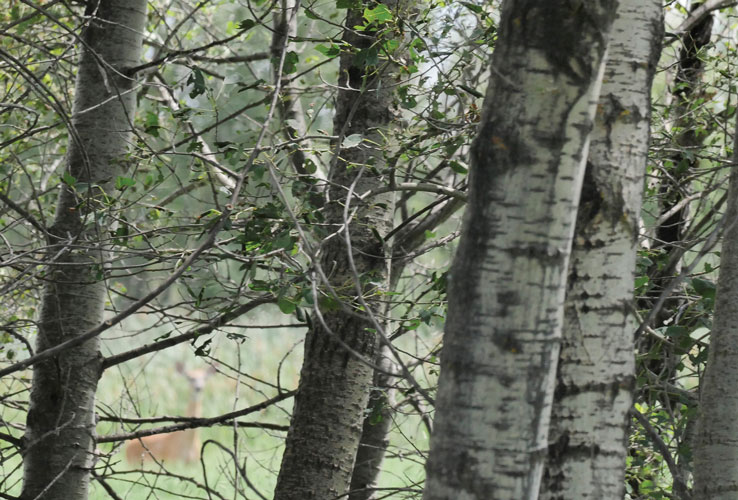
If you were busy watching a songbird in this aspen you might have missed the white-tailed deer walking along the other side (4) . Her colour, ear-nose-ear triangle, and movement should be detection tips.
Have you ever been afield with an experienced duck hunter who can accurately call the species of duck on the wing? It is likely they have numerous experiences of seeing the bird, dropping it in their decoys, then saying something like, "Ohhh...that buzzing flight was the way these buffleheads fly!" There are numerous clues to waterfowl species identification. These include wing beat speed, cruising height, body shape, colour, vocalizations, wing noises, flock configuration, direct or indirect flight, and flock size. It just takes time to put the patterns together.
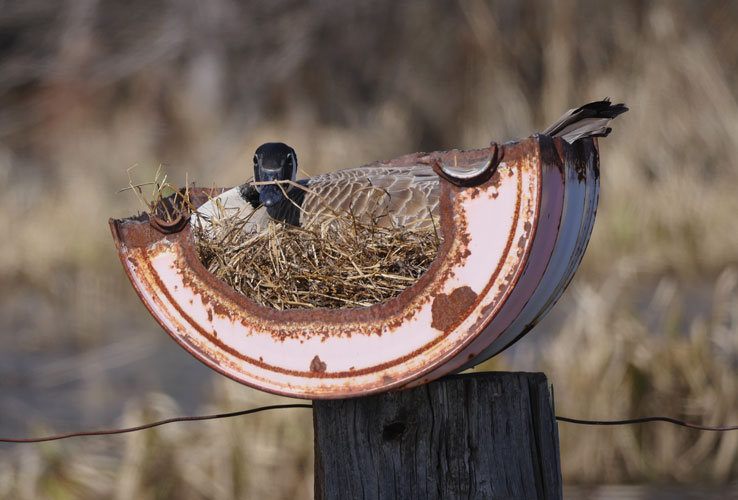
Sometimes we see animals in places we don't expect them, as demonstrated by this Canada Goose nesting at eye level. (5)
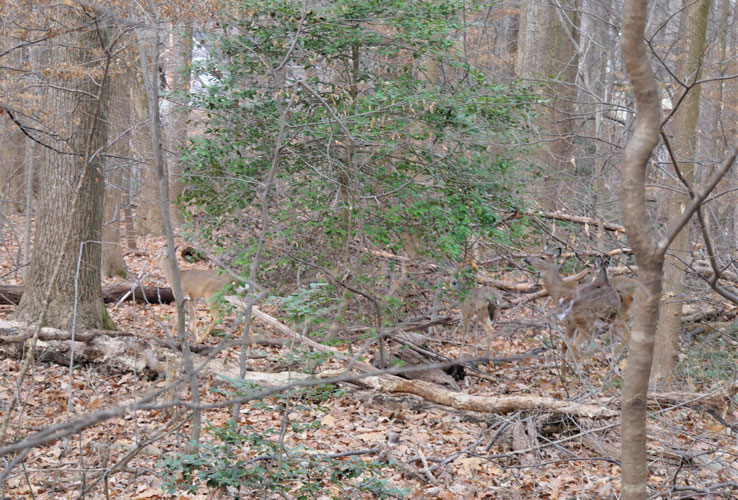
Finally, remember that many animals are gregarious and when we see an individual, close inspection might make its associates jump into focus. Test your outdoor eye by counting the white-tailed deer in the image (6) . Did you find all four? (hint: look through the green bush).