The wind whipped across the golden plains of southern Alberta, carrying the scent of ripe wheat and the crisp promise of a new dawn. It was the early 1900s, a time of transformation for the land, as the plow turned prairie sod into fertile fields. Yet, for the sportsmen of Calgary, this progress brought a pang of loss. The sharp-tailed grouse, once a familiar sight taking flight from the horizon, were becoming scarcer, their wild dances curtailed by the expanding farms.
Among these concerned men stood Judge Austin de Bernis Winter, a respected figure in the Calgary courtroom and a passionate devotee of the hunt. His love for the chase was matched only by his keen eye for a well-bred pointing dog. He believed that the partnership between hunter and skilled canine was the truest form of the sport.
"We need a new bird," he declared one evening, the warm glow of the hearth fire reflecting in his determined eyes. "A bird that can flourish alongside these burgeoning farms. And mark my words, a good pointer will find them just as readily!"
Their initial efforts, the introduction of the delicate bobwhite quail, met with disappointment. The unforgiving Alberta winters proved too harsh for the southern birds. But his legal mind, known for its thoroughness, and his sporting heart, ever hopeful, refused to concede defeat. He had heard whispers, tales carried on the wind from the east of a resilient game bird from Hungary, the Hungarian (or grey) partridge, affectionately known as the "Hun." He imagined his pointers, their noses in the air, locked up staunchly as a covey burst from cover.
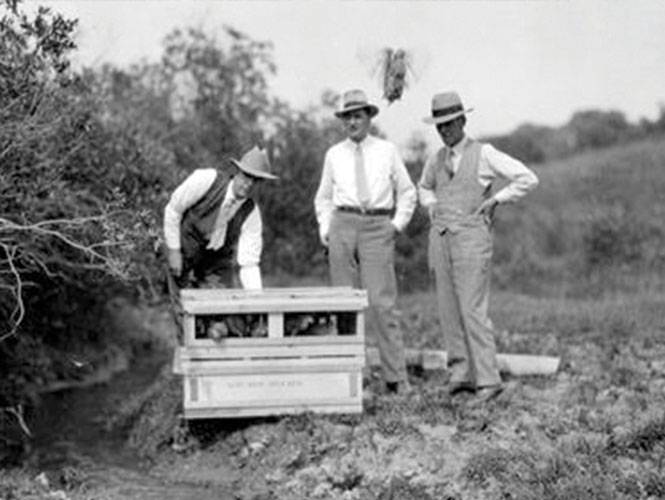
With unwavering spirit, Judge Winter orchestrated the gruelling journey of five precious pairs of these birds from a Pennsylvania game farm. It was a significant investment, a gamble on the future, and one that he discussed at length with his favoured English (or Llewellin) Setter, Bell, as if the dog understood the weight of the endeavour.
The day of their release, south of Calgary, near the settlement of De Winton, was filled with anticipation. The sportsmen watched with bated breath as the Huns—small, plump, their rusty faces alert—darted into the swaying grasses, their fate hanging in the balance of the prairie winds. Judge Winter, however, envisioned his pointers, their innate instincts honed over generations, working in these new fields.
The seasons turned, marked by planting and harvest. The sportsmen continued their pursuit of game, often accompanied by their loyal four-legged companions. But now, a new melody began to weave itself into the soundscape of southern Alberta—the dry, scratchy call of the Hungarian partridge. Surprisingly, they had thrived amidst the cultivated fields, coveys a living testament to Judge Winter's insightful vision. As the Hun population grew, so too did the opportunities for the pointing breeds Judge Winter so admired. He would often be seen in the fields, his setters ranging ahead, their elegant forms freezing into statuesque poses, tails held high, signalling the presence of the elusive partridge.
In a short five years came the autumn of 1913. The air held a sharp coolness, the leaves on the few scattered trees blazed with colour. It was the dawn of the first sanctioned Alberta Hungarian partridge hunting season. A sense of joyous gratitude permeated the gathering of sportsmen. They stood in the golden light of the early morning, their breath misting in the air, not just for the thrill of the coming hunt, but for the man who had made it possible.
Hats were tipped, not only in respect for the tradition of the chase, but specifically towards Judge Winter who stood among them with Bell patiently at his heel, her intelligent eyes fixed on his face. They understood that without his foresight, his unwavering belief in a seemingly small bird, and his determined efforts, the landscape of southern Alberta and the joy of watching a fine dog work a covey of birds would be undeniably diminished. The Hungarian partridge had not just found a home, it had become a part of the very fabric of the prairie—a lasting legacy to the judge whose passion for both the hunt and his pointing dogs had enriched their lives immeasurably.
The story of Judge Winter's contribution to Alberta's upland hunting did not end in the fields of De Winton. It has echoed beyond the borders of the province, for his successful introduction of the Hun proved so beneficial it sparked a ripple of change across the West. Soon word of the flourishing Hungarian partridge spread, and the birds found homes in Saskatchewan, Manitoba, and British Columbia—their numbers rising steadily, a boon for hunters from all walks of life.
In the United States, too, the Hungarian partridge made its mark. From the vast plains of the Dakotas to the rolling hills of Wyoming, the bird took root. Across the border, hunters in Montana, North Dakota, Nebraska, and South Dakota found themselves chasing the partridge alongside their loyal dogs—the familiar sounds of the hunt and the crackling gunfire becoming part of their outdoor heritage. The resilience of the bird, and its ability to thrive in a variety of terrains and climates, allowed it to flourish in regions once considered too harsh for game birds to prosper.
Today, the Alberta upland hunter owes a debt of gratitude to Judge Winter and his remarkable foresight. It was his passion, his vision for the future, and his tireless efforts to introduce the Hungarian partridge to the Canadian plains that have allowed a tradition to flourish. As hunters venture into the fields, accompanied by their pointing dogs, it is not just the hunt that they celebrate but the legacy of a judge whose understanding of both nature and sport has left an indelible mark on the history of upland hunting in Alberta and beyond!